|
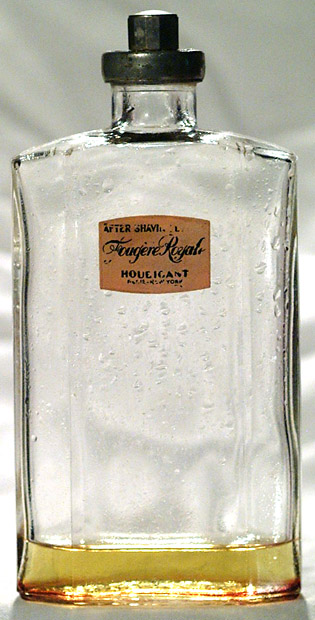
Houbigant's Fougère Royal, launched in 1882, is credited with being the first perfume to make use of a synthetic odorant, coumarin. Fougère Royal was the work of Houbigant's owner and chief perfumer, Paul Parquet.
Coumarin is a chemical compound that occurs naturally in materials such as the tonka bean, woodruff and bison grass. The name "coumarin" comes from the French word "coumarou", meaning "tonka bean."
But Parquet's coumarin did not come from the tonka bean. In 1868, William Henry Perkin, an English research and manufacturing chemist, had discovered a method of producing coumarin from coal tar and it was this discovery that ultimately led to the creation of Fougère Royal.
Today "natural perfumery" people may look upon an odorant derived from coal tar with horror but, in the mid-19th century, creating useful products from coal tar amounted to a huge step forward in conservation and recycling. Coal tar was a byproduct of the production of coal gas — the gas used for lighting homes, offices, factories and streets. The disposal of large quantities of ugly, unloved, unwanted coal tar posed a serious environmental problem — until chemists learned to turn it into naphtha, light oil, creosote, road tar, pitch, dyes for England's immense textile manufacturing industry, and odorants for perfumery. (Today coumarin is banned for use as food additive as being moderately toxic to the liver and kidneys when taken internally. Yet coumarin from plant sources continues to find use in some countries as a flavorant for alcoholic beverages.)
In Fougère Royal, Parquet's contribution to modern perfumery, in addition to his use of a synthetic odorant, was the creation of a distinctive accord between oakmoss, violet and coumarin which has inspired a large percentage of man's colognes created ever since — the "fougère" family.
The word "fougère" means "fern" in French but the aroma of a fern is almost non-existent. It is speculated that as Fougère Royal did not have the aroma of any known flower, a bit of imagination was used in the naming. At least one writer has suggested that this imaginative naming, which gave a personality to a perfume, was the beginning of another modern trend.
Fougère Royal was discontinued in the 1950's; then introduced in an updated version in 1959 in a bottle styled by Enrico Doinati. There was another relaunch in 1988 but today Fougère Royal has vanished from the market.
##
If you have any information on Fougère Royal or Houbigant, please share it with us using the message sender below. |